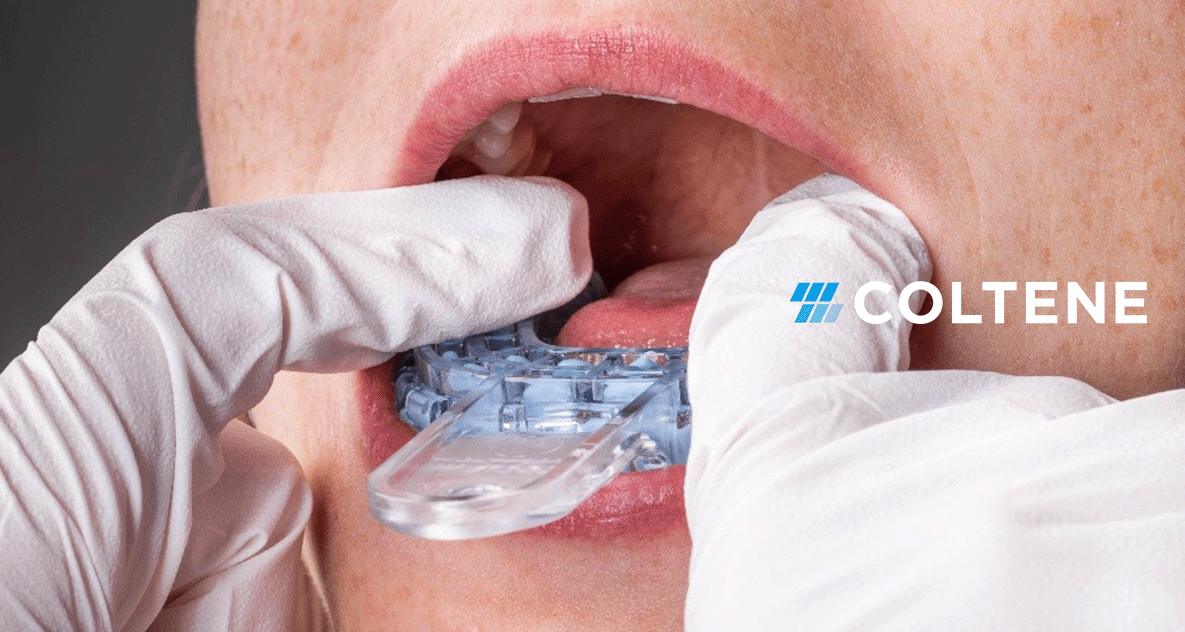
In modern dentistry, digital impression technology continues to advance rapidly. Yet, analog dental impressions remain indispensable in clinical settings. They are known for their high precision and reliability, especially in complex cases. This is largely due to the diverse selection of dental impression material options, each offering distinct advantages tailored to specific clinical scenarios.
A precise dental impression, whether captured digitally or using conventional methods, plays a critical role in ensuring the long-term success of dental restorations. The outcome hinges not only on the dentist’s technique but also on choosing the right impression material, understanding its properties, and applying it correctly.
Types of Dental Impression Materials
Alginate (hydrocolloid impression material)
Alginate impression material is a fast-setting, irreversible hydrocolloid used in dentistry to create accurate and stable teeth impressions for various treatments. This is an economical and easy-to-use impression material ideal for preliminary impressions.
Application Examples: Situational impressions for study models, impressions for the creation of provisional crowns, bridges, and opposing arch models.
Main Ingredients: Alginate acid, calcium sulfate, sodium phosphate, and various fillers.
Advantages
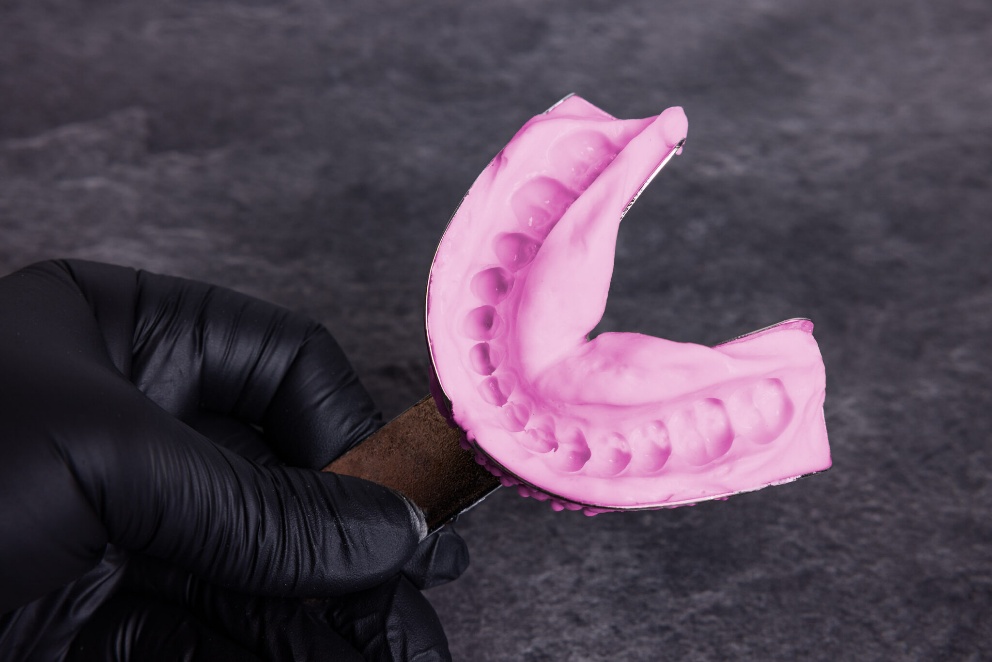 very cost-effective
- easy to handle
- biocompatible
- hydrophilic
Disadvantages
- low detail accuracy
- short dimensional stability
- can only be poured once
- requires moist storage until poured
C-Silicone (elastomeric impression material)
C-silicone impression material is condensation-cured and offers reasonable detail reproduction at an economical cost. It is often used for standard prosthodontic procedures.
Application Examples: Impressions for crowns, bridges, inlays, onlays, as well as for dentures and opposing impressions.
Main Ingredients: Silicone polymer, organotin compounds, curing agents, fillers, plasticizers, and other additives.
Advantages
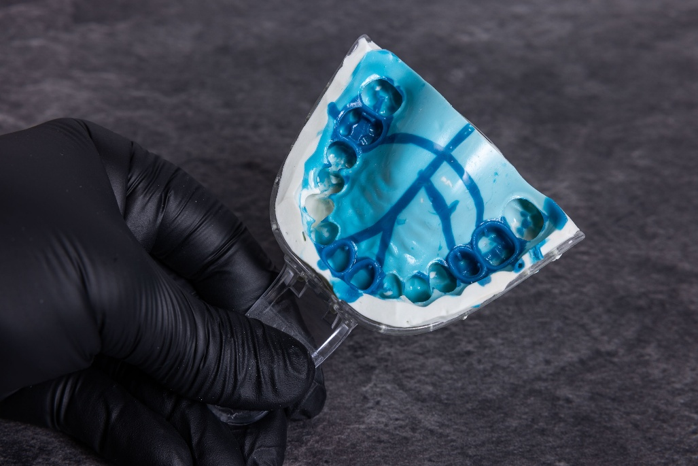
- cost-effective
- insensitive to differences in dosage
- adjustable working / setting times
- high detail accuracy
Disadvantages
- low dimensional stability
- not hydrophilic
- can react with aluminum compounds, iron sulfates, and potassium metabisulfite
- separation of alcohols
A-Silicone (polyvinyl siloxane impression material, elastomeric impression material)
Polyvinyl siloxane (PVS) impression material is an addition-cured dental silicone known for its outstanding dimensional stability and precision. It is widely regarded as the gold standard for highly accurate prosthodontic work in many dental practices.
Application Examples: Impressions for crowns, bridges, inlays, onlays, implant impressions, as well as impressions for dentures and opposing models.
Main Ingredients: Vinyl polysiloxane, hydrogen polysiloxane, platinum compounds, fillers, plasticizers, and other additives.
Advantages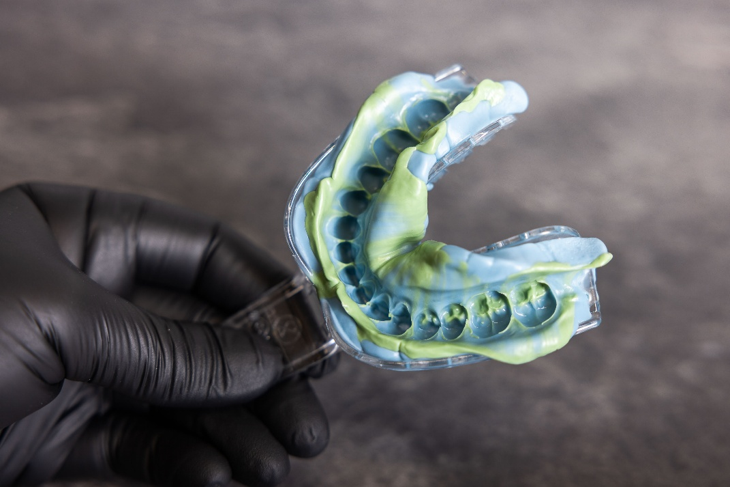
- high detail accuracy
- high quality ingredients
- very long-term dimensional stability
- surface activation through surfactants
- multiple pouring possible over extended periods
Disadvantages
- not hydrophilic
- very sensitive in dosing
- can react with latex, aluminum compounds, iron sulfates, polyethylen glycol, and potassium metabisulfite
Polyether (elastomeric impression material)
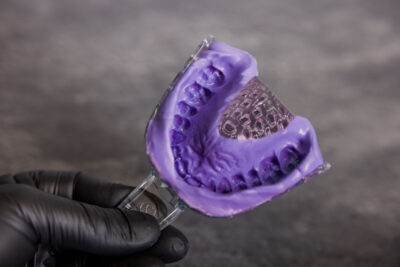
Polyether impression material is known for its superior hydrophilicity and rigidity, this dentist impression material is ideal for capturing detailed impressions even in moist environments. It’s often favored for implant cases due to its outstanding flow properties and accuracy.
Application Examples: Impressions for crowns, bridges, inlays, onlays, implant impressions, as well as impressions for dentures and opposing models.
Main Ingredients: Polyether polymer, alkyl sulfonium tetrafluoroborate, fillers, plasticizers, and other additives.
Advantages
- high detail accuracy
- high quality
- hydrophilic
- material tolerates slight inaccuracies in the process
Disadvantages
- can absorb water and swell
- not long-term dimensionally stable
- can react with aluminium compounds and iron sulfates
- inhibition by acids with a pH value below 4 (this means that acidic substances, such as blood, saliva, or astringents, can interfere with the setting process or delay it)
- relatively stiff material, difficult to remove from the mouth
10 Tips for Handling Dental Impression Materials
- Mix precisely
Whether the impression material is mixed manually, such as impression material putty, or using an automix system, precise mixing is essential. When hand-mixing, use clean spatulas and follow the correct base-to-catalyst ratio. Always recap tubes and jars immediately after use to prevent contamination or premature setting.
- Handle automix cartridges correctly
For automix cartridges – whether 50/75 ml or large 350–380 ml – leave the used mixing tip on the cartridge, replace with a new tip just before the next use. This prevents cross-contamination and preserves material integrity.
- Purge before use
Always squeeze a small amount of material from automix cartridges before beginning. This ensures a consistent and accurate mix ratio of base and catalyst.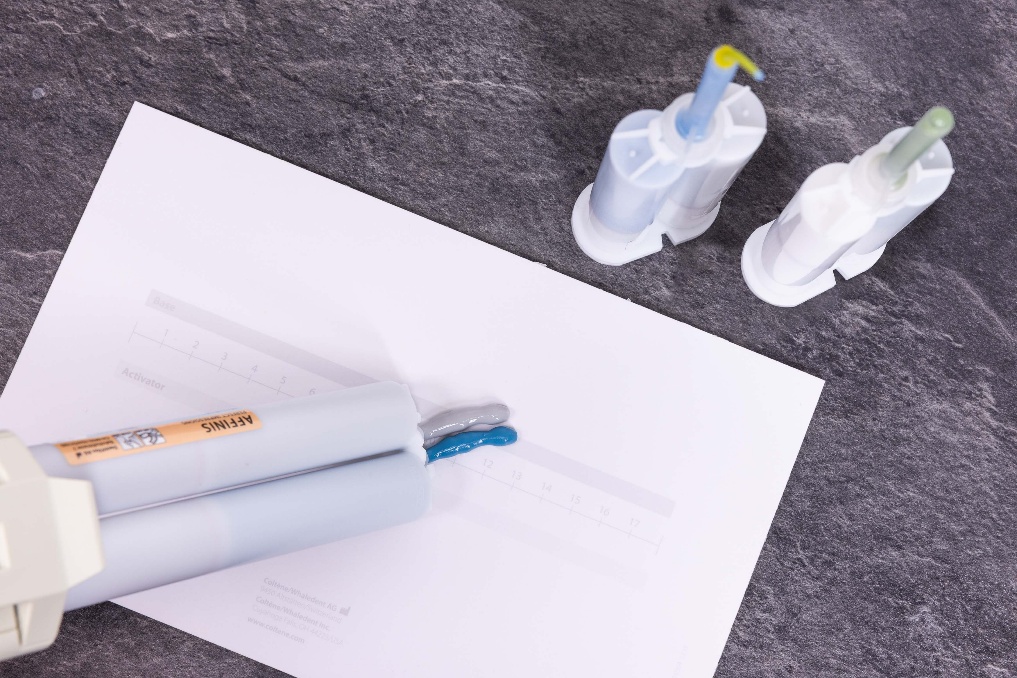
- Use suitable gloves
Avoid latex gloves when handling polyvinyl siloxane impression material, as sulfur compounds in latex can inhibit polymerization. Opt for nitrile or vinyl gloves instead.
- Apply tray adhesives
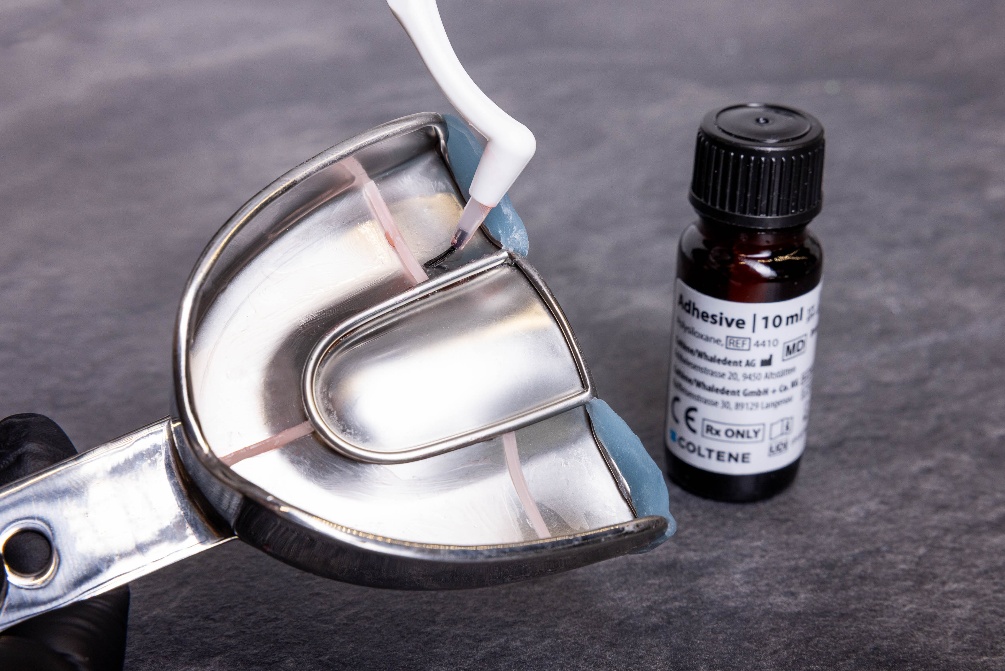
Use tray adhesives to prevent the material from detaching from the impression tray when removing the impression from the mouth. Important: When using adhesives, ensure the compatibility of the tray material and the impression material with the adhesive.
- Store materials properly
Constant and significant temperature fluctuations during the storage of materials can affect the working and setting time of the material.
- Consider the room temperature
The setting times of products can be influenced by the current room temperature and may differ from the manufacturer’s specified times. If it’s colder, setting will take longer, and if it’s warmer, setting will be faster.
- Check compatibility of hemostatic agents
 Before using hemostatic agents, verify their compatibility with the chosen light body impression material or putty material.
- Follow disinfection and storage instructions
Check the manufacturer’s disinfecting and sterilization instructions for each product and correctly store the dental impression after the impression is taken until it is used by the technician.
- Track usage time after opening
Products have a limited shelf life after opening, which may differ from the indicated expiration date. Therefore, always follow the manufacturer’s instructions.
Conclusion
Despite the advancing technology of digital impressions, analog impressions are still indispensable in certain cases. Their high precision, material variety, and flexibility in application make them a reliable method, especially in complex cases.
Mastery over the types of dental impression material—can greatly enhance clinical outcomes. With proper handling, storage, and technique, dentists can rely on these materials to consistently deliver accurate, reliable impressions across a variety of restorative and prosthodontic applications.
Whether you’re using Alginate, A-Silicon, C-Silicon or Polyether, the key is understanding the science behind each choice. By doing so, you’ll be equipped to make informed, confident decisions in every clinical scenario.
If you would like to know more, talk to one of the Henry Schein team today.

